What a device can tell you about a session.
A session has more than one clue. How to attach device intelligence to the moments that matter, read what comes back, and plan for what it cannot tell you.
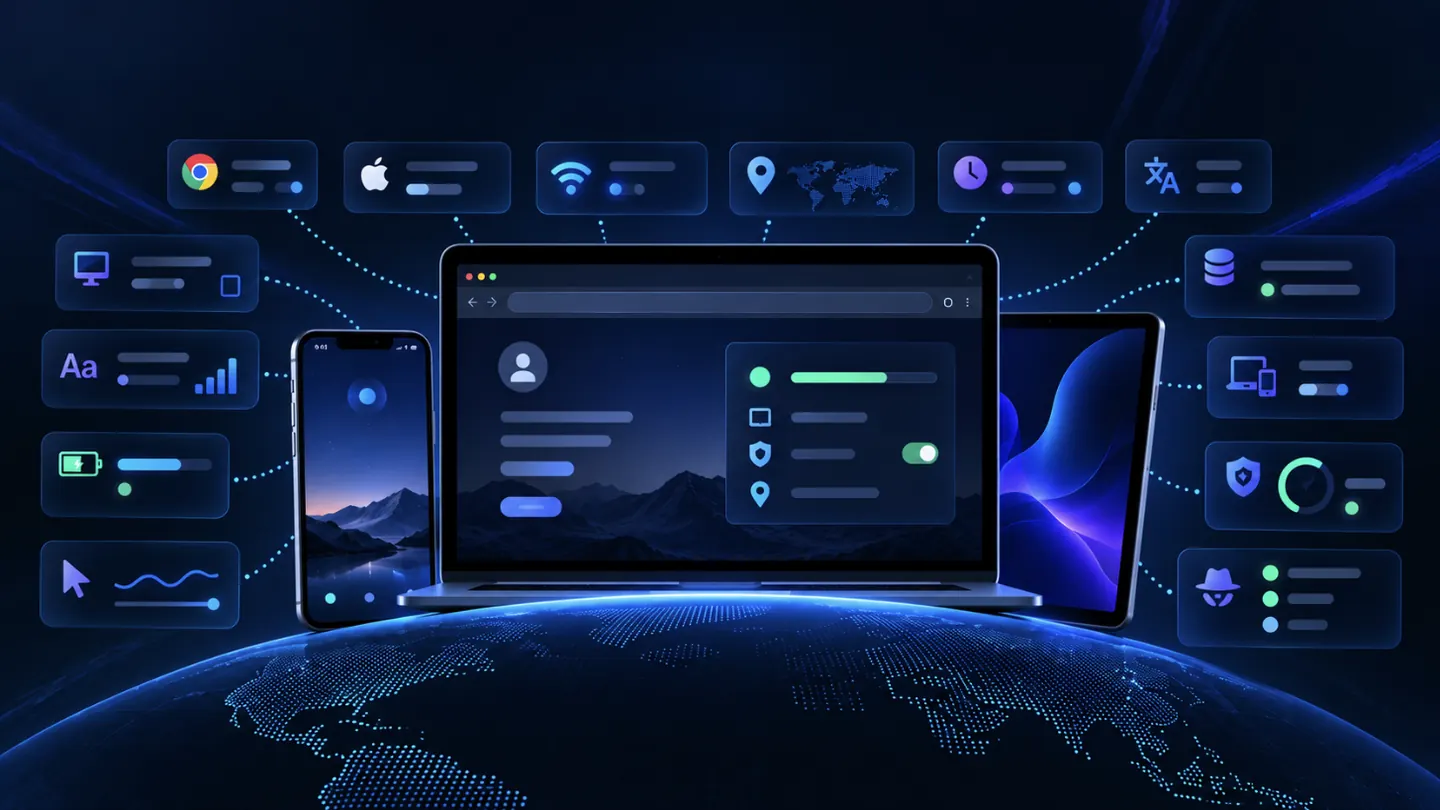
A useful device intelligence integration starts with a question: what do you need to understand at this moment in your product? A login, a first purchase, and a reward claim may need different context.
Start with a meaningful event.
Attach the identification request to the action you want to assess. Keep the connection between the event, its result, and your eventual decision understandable to an investigator.
Look for relationships, not shortcuts.
Recurring device context, environment inconsistencies, and related account activity appear together in the inspector. Each is a lead to investigate, not proof that a person is acting maliciously.
Plan for uncertainty.
Different environments may yield different signal coverage. Define what an unknown or unavailable result means for your workflow, and do not substitute a guessed value merely to make your policy easier to write.
Review the outcome.
Start with observation. Examine which signals were useful and where legitimate customers were affected. Adjust the policy using evidence from your own product.
An introductory guide, not a claim about implemented detection coverage.